



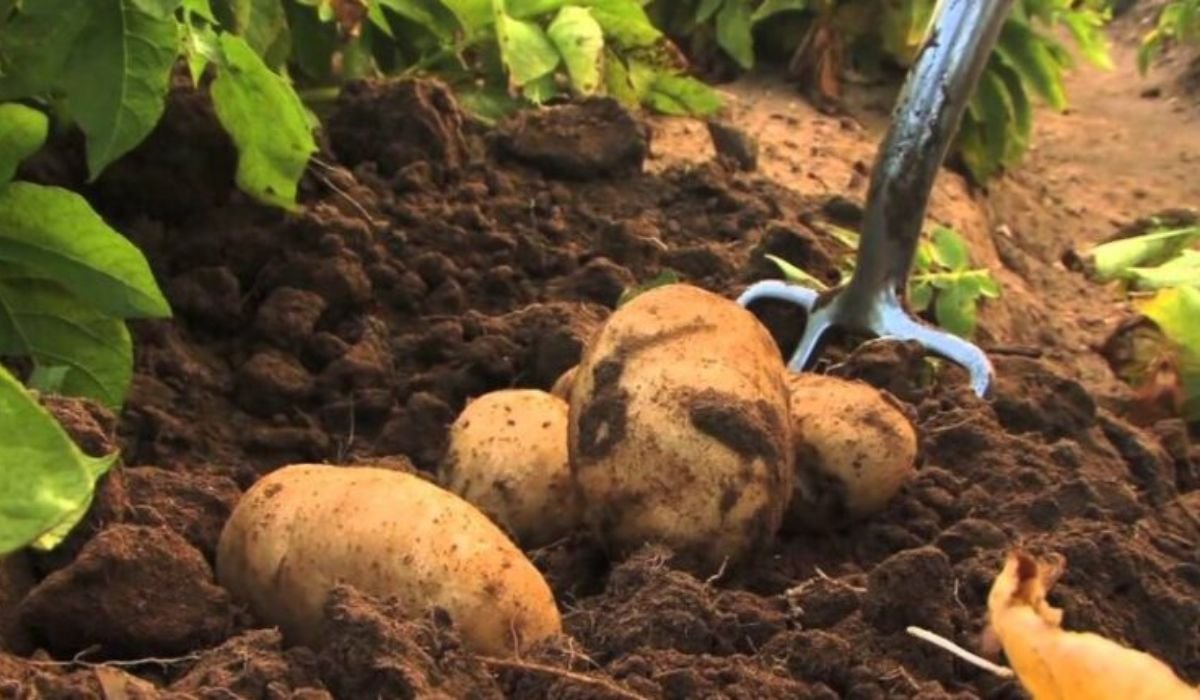
Indian potato farmers now have two newly notified varieties to consider for future cultivation. ICAR-Central Potato Research Institute developed Kufri Abhedya and Kufri Ruby, which were officially notified for commercial cultivation in July 2026. The varieties target different farming needs, from disease resistance to the growing baby potato market.
For farmers, a new variety matters only when it solves a real field problem. Kufri Abhedya is notable because it combines resistance to late blight and potato cyst nematodes. Kufri Ruby has been developed with a focus on baby-sized potatoes and shorter crop duration, giving farmers another market-oriented option.
Kufri Abhedya is a medium-maturing table potato variety that takes around 110 to 120 days under kharif conditions. It can produce about 25 to 30 tonnes per hectare under suitable conditions. Its resistance to late blight and potato cyst nematodes is particularly relevant for hill-growing regions.
The variety has been recommended for Himachal Pradesh, Uttarakhand, Jammu & Kashmir, Ladakh and northeastern hill regions. It is also recommended for some other potato-growing areas, including the Nilgiri hills and parts of Karnataka and Maharashtra. Farmers should still follow local recommendations before arranging seed.
Late blight can cause serious losses when weather conditions favour disease development. Potato cyst nematodes can also damage roots and reduce crop performance. A variety carrying resistance against these problems could reduce dependence on repeated disease management, though farmers will still need proper field monitoring and recommended crop practices.
What makes Kufri Ruby different?
Kufri Ruby has a different commercial focus. The variety is designed for the baby potato market and produces nearly 60% baby-sized tubers within about 90 days. This shorter production period could interest farmers who have access to buyers looking specifically for smaller potatoes.
Market access should be considered before planting Kufri Ruby on a large area. Producing a crop for a specific market without knowing the buyer, expected price and quality requirements can create financial risk. Farmers should first check demand with traders, processors or organised buyers in their region.
A disease-resistant variety cannot compensate for poor-quality planting material. Farmers should purchase certified seed from authorised sources and check whether the seed is suitable for their region and planting season.
Seed health also affects crop establishment. Farmers should avoid planting material showing obvious disease, rotting or physical damage. Good field preparation, appropriate spacing and balanced nutrient management remain necessary even when farmers choose an improved variety.
The performance of any potato variety depends on soil, temperature, irrigation, planting time and management. A variety performing well in one district may not deliver the same result under different conditions.
Farmers should therefore begin with a small area if they are trying a new variety for the first time. Comparing its growth, disease response, yield and market price with their existing variety can provide useful information before expanding cultivation.
Disease resistance can reduce pressure
Disease-resistant varieties can give farmers another tool for managing crop problems. If disease pressure is lower, farmers may have fewer reasons to apply plant protection products repeatedly.
This does not mean pesticides will never be required. Farmers should continue field scouting and use control measures when recommended. Preventive practices, clean seed, crop rotation and timely monitoring can work alongside genetic resistance.
Kufri Ruby’s baby potato characteristic could create an opportunity where buyers pay for specific size and quality. But the benefit depends on the local market.
Before sowing, farmers should ask buyers what size they need, when they purchase, how produce is graded and whether they provide better prices for consistent supply. These details can help determine whether the variety fits the farm’s business plan.
Farmers should first confirm whether the variety is recommended for their region. They should then check seed availability, planting season, irrigation requirements, disease history and expected market demand.
For farmers in Jammu & Kashmir and other hill regions, Kufri Abhedya is particularly relevant because it has been recommended for these areas. Local agricultural officers and KVKs can provide guidance on suitable planting conditions and seed sources.
A variety is only one part of the solution
New potato varieties can help farmers address specific production problems, but they cannot solve every challenge. Weather, seed quality, soil health, irrigation, pests, storage and market prices all influence the final return from potato cultivation.
The main advantage of these new varieties is that they give farmers more choices. Kufri Abhedya offers disease resistance, while Kufri Ruby targets the baby potato market. Farmers should choose based on their own field conditions and the buyers available to them.
Also Read: Punarnava Jal – The world’s first organic fertilizer! Know how it is beneficial for farmers?
Contact us – If farmers want to share any valuable information or experiences related to farming, they can connect with us via phone or whatsapp at 9599273766 or you can write to us at “kisanofindia.mail@gmail.com”. Through Kisan of India, we will convey your message to the people, because we believe that if the farmers are advanced then the country is happy.
You can connect with Kisan of India on Facebook, Twitter, and Whatsapp and Subscribe to our YouTube channel.