


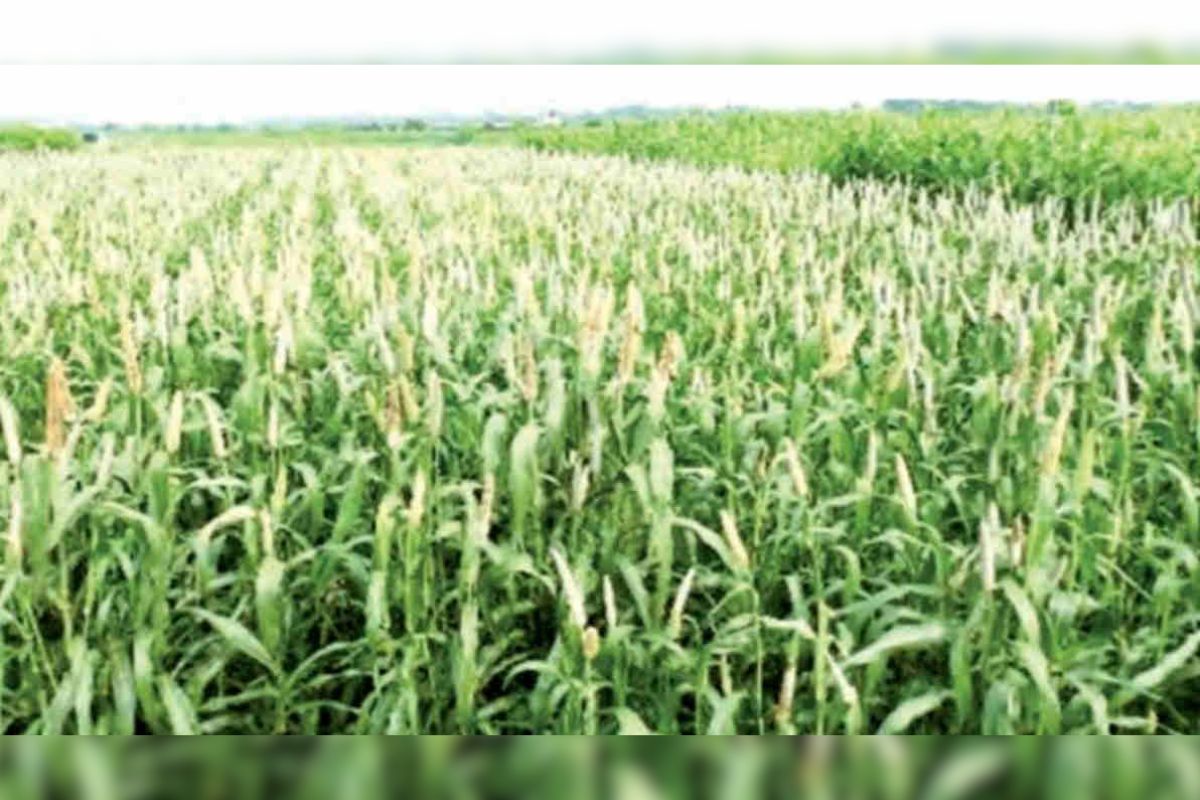
Farmers in difficult hill regions often face a shorter window for crop cultivation. Wild animals, changing weather and difficult field conditions can increase production risks. A new finger millet variety, VL Mandua 376, is being assessed with farmers in Arunachal Pradesh for its shorter crop duration and field performance.
ICAR-Vivekananda Parvatiya Krishi Anusandhan Sansthan and KVK Tawang recently assessed VL Mandua 376 in Gongkhar and Gyamtong villages. Farmers reported that the variety matured earlier and produced higher grain yields than locally grown cultivars under the conditions observed during the field assessment.
The main feature reported by farmers is its early maturity. ICAR said VL Mandua 376 reached harvest around 25–35 days earlier than local cultivars during the Tawang field assessment. A shorter crop duration can give farmers more flexibility where the growing season is limited or where crops face prolonged exposure to field risks. The shorter duration can also reduce the period during which farmers need to protect their fields from wild animals. This was specifically highlighted during the Tawang assessment. For remote hill communities, reducing the time spent guarding crops can have practical value beyond the final grain yield.
Farmers also reported substantially higher grain yields compared with their local cultivars during the field observations. These are field-level observations from the programme and should not be treated as a guaranteed yield for every location or farming system.
ICAR scientists used farmer–scientist interactions and field demonstrations to collect feedback on cultivation experience, varietal performance, challenges and farmer preferences. This type of testing helps researchers understand how a variety performs under actual local conditions rather than relying only on experimental plots.
Why Finger Millet Matters
Finger millet, commonly called ragi, is an important millet crop used for food and fodder. ICAR describes millets as crops with potential for nutrition and climate resilience, while research programmes continue to develop improved varieties and production technologies.
Finger millet can be useful in areas where farmers need crops that fit local rainfall and soil conditions. But farmers should not assume that every millet variety is suitable for every region. Variety selection needs to consider altitude, temperature, rainfall, soil and the length of the local growing season.
The Tawang field assessment is important because the variety was being tested under challenging hill conditions. Farmers and scientists compared it with locally grown cultivars and discussed cultivation experiences, seed preferences and production challenges.
ICAR’s wider millet research programme focuses on improved cultivars, climate-resilient production technologies, seed systems, post-harvest management and value addition. These areas matter because higher farm production alone does not guarantee better income if farmers lack suitable markets or processing facilities.
Can Early Maturity Reduce Farm Risk?
A shorter crop duration can help farmers finish harvesting earlier, but its value depends on local conditions. If farmers face a specific weather risk late in the season, early maturity may help them avoid part of that exposure.
In Tawang, ICAR specifically linked the shorter maturity period with reduced time spent guarding crops against wild animals. This shows why crop duration can matter differently across regions. Farmers may value an early variety for reasons that go beyond yield alone.
Climate variability can make crop duration even more important. Changes in rainfall timing and temperature can affect sowing and harvesting windows. A variety that fits a shorter or shifting growing season may give farmers another option, although it cannot eliminate weather-related risks.
Farmers should therefore compare crop duration along with yield, grain quality, seed cost, disease response and market demand. A variety that matures early but does not match local market requirements may not provide the expected economic benefit.
ICAR’s Tawang assessment also highlighted the need for stronger post-harvest and market-oriented interventions. Scientists pointed to small-scale millet processing and value addition as possible ways to create additional livelihood opportunities as production increases.
Farmers can sell millet as grain, but processing can create products such as flour and other value-added foods. Processing requires equipment, quality control and reliable buyers. Individual farmers may find it difficult to invest alone, making FPOs and farmer groups useful for shared facilities.
ICAR-IIMR has also been working with industry and start-ups on millet technologies. A September 2026 Technology Day in Hyderabad showcased improved millet cultivars, millet-based food technologies and research facilities to industry representatives and other stakeholders.
This creates an opportunity for farmers to think beyond cultivation. If local demand exists, improved varieties can be linked with processing and marketing activities. But farmers should check the market before investing in equipment or expanding production.
What Farmers Should Check Before Growing It
Farmers interested in VL Mandua 376 should first confirm whether the variety is recommended and available for their particular region. Performance in Tawang cannot automatically be applied to farms in other states or climates.
The nearest KVK or agriculture department can provide information about suitable varieties, seed sources, sowing time and recommended crop management. Farmers should also ask whether certified or quality seed is available before purchasing planting material.
Farmers can test a new variety on a smaller area before replacing an established local variety across the entire farm. Comparing maturity, yield, labour requirement, disease incidence and market acceptance can provide useful information for the next season.
The Tawang experience shows that crop improvement is not only about producing more grain. A variety that matures earlier can also change labour requirements and reduce exposure to specific local risks. The value depends on how well the variety matches the farmer’s production conditions.
VL Mandua 376 is therefore an interesting option for farmers in suitable hill environments, but adoption should be based on local recommendations and field evidence. Farmers should assess crop duration, expected yield, seed availability and market demand before making a larger investment.
For farmers looking at improved millet varieties, the practical approach is simple: identify the main production risk, check varieties recommended for the area, obtain quality seed and test performance on a small plot first. This can help farmers adopt new varieties without taking unnecessary production risks.
Also Read: Punarnava Jal – The world’s first organic fertilizer! Know how it is beneficial for farmers?
Contact us – If farmers want to share any valuable information or experiences related to farming, they can connect with us via phone or whatsapp at 9599273766 or you can write to us at “kisanofindia.mail@gmail.com”. Through Kisan of India, we will convey your message to the people, because we believe that if the farmers are advanced then the country is happy.
You can connect with Kisan of India on Facebook, Twitter, and Whatsapp and Subscribe to our YouTube channel.