



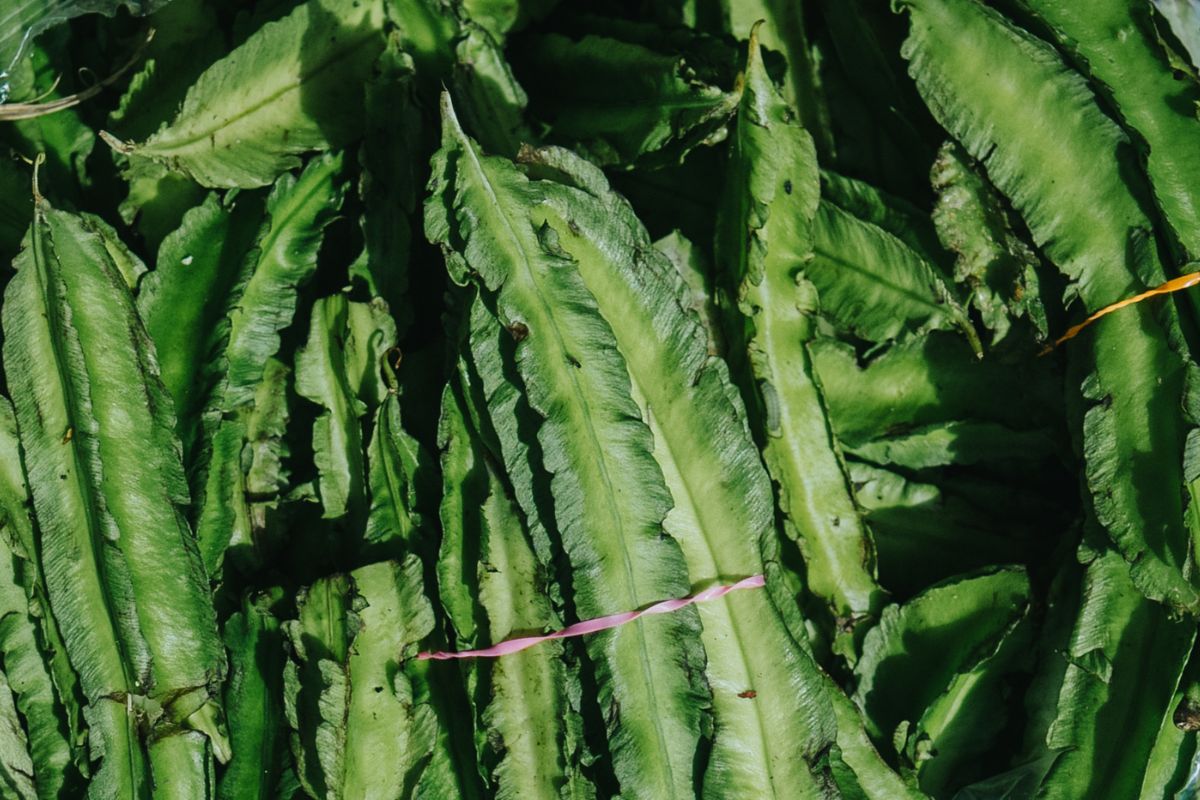
As agriculture faces increasing pressure from climate change, declining soil fertility, and rising input costs, researchers are looking beyond conventional crops for solutions. One crop attracting renewed attention is winged bean, a tropical legume often described as one of the most versatile food crops in the world.
Unlike many crops that provide only one useful product, almost every part of the winged bean plant can be utilised. Farmers can consume the pods, leaves, flowers, seeds, and even underground tubers. This makes the crop valuable not only for food production but also for improving farm diversity and resilience.
Agricultural scientists believe winged bean has the potential to contribute to future food security, particularly in regions where farmers need crops that perform well under challenging conditions.
Winged bean is known for its high protein content. The seeds contain protein levels comparable to soybean, while the leaves and pods provide vitamins, minerals, and dietary fibre.
Nutrition researchers have highlighted the crop’s potential to support food security because multiple edible plant parts can be harvested throughout the growing season. This allows households to obtain a variety of nutrients from a single crop.
Interest in nutrient-rich crops is increasing as countries seek to improve dietary diversity and reduce dependence on a limited number of staple foods.
Improves Soil Fertility Naturally
Like other legumes, winged bean forms a partnership with nitrogen-fixing bacteria in the soil. These microorganisms capture atmospheric nitrogen and convert it into forms that plants can use.
This process improves soil fertility while reducing the need for synthetic nitrogen fertilisers. Farmers cultivating winged bean can benefit from healthier soils and lower input costs.
Researchers studying sustainable agriculture frequently recommend legumes because of their contribution to soil improvement and long-term productivity.
Winged bean fits well into mixed farming systems where farmers cultivate multiple crops throughout the year. It can be grown alongside vegetables, cereals, and horticultural crops while contributing to overall farm diversity.
Diversified farms are often more resilient because they reduce dependence on a single crop. If one enterprise performs poorly because of weather or market conditions, other crops can help maintain income.
Agricultural economists consistently identify diversification as an important strategy for reducing farming risks.
Although winged bean has been cultivated for generations in parts of Asia and the Pacific, it remains underutilised compared with major legumes. Research institutions are now evaluating improved varieties with higher yields, better disease resistance, and wider adaptability.
Scientists are studying its performance under different environmental conditions and exploring opportunities for commercial cultivation. Growing interest in climate-resilient crops has further increased attention on the species.
Researchers believe underutilised crops may become increasingly important as agriculture adapts to future challenges.
Potential for Climate-Resilient Agriculture
Many farming regions are experiencing higher temperatures and more variable rainfall. Crops capable of maintaining productivity under these conditions are becoming valuable assets for farmers.
Winged bean’s ability to improve soil fertility, provide multiple harvestable products, and contribute to farm diversity makes it attractive for climate-smart agriculture. Researchers see potential for the crop in regions seeking alternatives to input-intensive production systems.
Its versatility allows farmers to derive value from different parts of the plant throughout the season.
Winged bean demonstrates how traditional crops can offer solutions to modern agricultural challenges. High nutritional value, soil-improving properties, and multiple uses make it different from many conventional crops grown today.
For farmers, it offers an opportunity to diversify production and reduce reliance on external inputs. For researchers, it represents a promising crop for sustainable agriculture and future food systems.
As interest in resilient and resource-efficient farming grows, winged bean is gradually moving from the margins of agriculture toward the centre of discussions about future crop diversity.
Also Read: Punarnava Jal – The world’s first organic fertilizer! Know how it is beneficial for farmers?
Contact us – If farmers want to share any valuable information or experiences related to farming, they can connect with us via phone or whatsapp at 9599273766 or you can write to us at “kisanofindia.mail@gmail.com”. Through Kisan of India, we will convey your message to the people, because we believe that if the farmers are advanced then the country is happy.
You can connect with Kisan of India on Facebook, Twitter, and Whatsapp and Subscribe to our YouTube channel.