


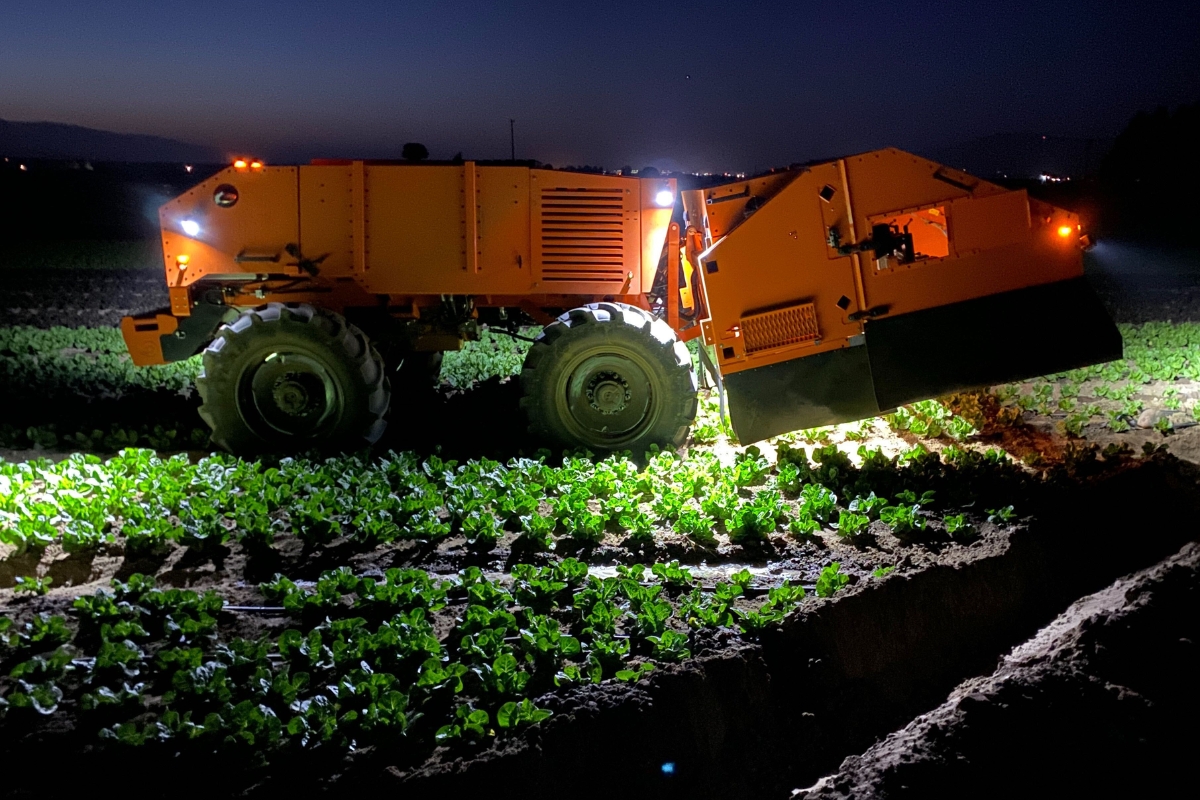
Weed management remains one of the most labour-intensive activities in vegetable cultivation. Farmers spend considerable time and money removing unwanted plants that compete with crops for nutrients, water, sunlight, and space. In many regions, labour shortages and rising wages are making this task increasingly difficult, especially for growers managing large areas of vegetables.
To address this challenge, agricultural engineers and machinery manufacturers are developing robotic weeders capable of identifying and removing weeds with minimal human intervention. These machines use cameras, sensors, and artificial intelligence to distinguish between crops and weeds while moving through fields.
Researchers believe robotic weeders could become an important part of future farming systems as agriculture faces growing pressure to reduce labour dependence while maintaining productivity.
Labour Shortages Are Driving Innovation
Many vegetable crops require repeated weeding throughout the growing season. Traditionally, farmers relied on manual labour or mechanical cultivation methods to keep fields clean. While effective, these approaches can become expensive and difficult to manage when workers are unavailable during critical periods.
Robotic weeders help address this issue by automating a task that often consumes a large share of farm labour resources. Farmers can maintain fields more efficiently while reducing dependence on seasonal workers.
Agricultural economists frequently identify labour availability as one of the biggest challenges affecting horticultural production in many regions.
The most advanced robotic weeders use computer vision systems to recognise different plants in the field. Cameras continuously scan crop rows while software analyses images and identifies weeds based on shape, size, colour, and growth patterns.
Once weeds are detected, the machine removes them mechanically without damaging nearby crops. This precision allows farmers to target unwanted plants while preserving valuable crop stands.
Researchers studying agricultural automation believe improvements in image recognition technology will continue increasing the accuracy and effectiveness of robotic systems.
Many farmers rely on herbicides to control weeds, particularly when labour costs become too high. While herbicides remain important tools, excessive dependence can increase production costs and create environmental concerns.
Robotic weeders offer an alternative approach by physically removing weeds rather than relying entirely on chemical control. This can reduce herbicide use while supporting more precise weed management strategies.
Scientists working on sustainable agriculture frequently emphasise the importance of combining multiple weed control methods rather than depending on a single solution.
Vegetable Growers Are Leading Adoption
The technology is gaining the most attention in high-value crops where weed competition can significantly affect profitability. Vegetable growers often invest heavily in crop management and therefore benefit strongly from technologies that improve efficiency.
Crops such as lettuce, onions, carrots, cabbage, and other vegetables are among the early targets for robotic weeding systems. These crops typically require careful management and frequent field operations throughout the growing season.
Industry analysts expect adoption to expand gradually as equipment becomes more affordable and accessible.
Robotic weeders are part of a broader trend toward precision agriculture. Farmers increasingly use technologies that apply resources only where they are needed rather than treating entire fields uniformly.
This approach improves efficiency while reducing waste. Instead of broad interventions, growers can focus attention on specific problem areas identified through technology and data analysis.
Researchers believe precision farming tools will play a major role in improving agricultural productivity while helping farmers manage rising input costs.
The Future of Weed Control
Weed management has challenged farmers for thousands of years. While the problem remains the same, the tools used to address it are changing rapidly. Robotic weeders demonstrate how automation and artificial intelligence are beginning to transform everyday farm operations.
For vegetable growers, the technology offers a way to reduce labour dependence, improve precision, and maintain cleaner fields throughout the growing season. As equipment continues to improve, robotic systems are likely to become more common across different types of farming.
Across vegetable farms, machines are beginning to take on one of agriculture’s oldest and most demanding jobs. The future of weed control may depend as much on algorithms and cameras as it does on hoes and tractors.
Also Read: Punarnava Jal – The world’s first organic fertilizer! Know how it is beneficial for farmers?
Contact us – If farmers want to share any valuable information or experiences related to farming, they can connect with us via phone or whatsapp at 9599273766 or you can write to us at “kisanofindia.mail@gmail.com”. Through Kisan of India, we will convey your message to the people, because we believe that if the farmers are advanced then the country is happy.
You can connect with Kisan of India on Facebook, Twitter, and Whatsapp and Subscribe to our YouTube channel.