


How a Kishtwar Farmer Turned Walnut Nursery Work Into a ₹15–20 Lakh Annual Business

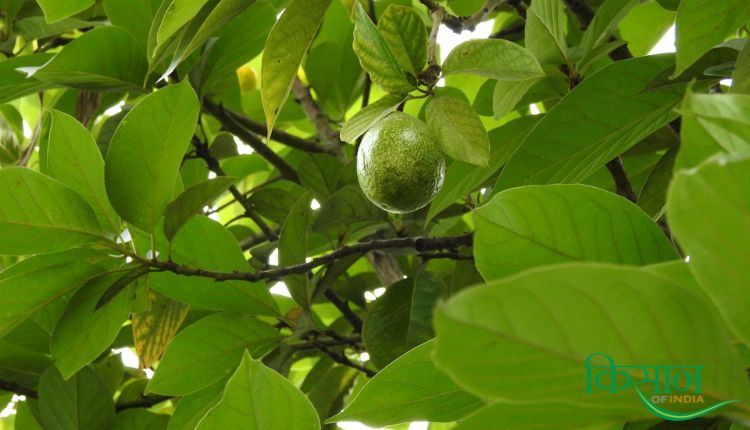
Walnut farming is an important part of horticulture in parts of Jammu and Kashmir, but growing trees alone does not always provide a stable income. A farmer from Kishtwar has shown how nursery production and scientific cultivation can create another business opportunity. Shri Suneel Singh, an ex-serviceman from Gundarna village in Kishtwar district, increased his annual income from about ₹2 lakh in 2021 to between ₹15 lakh and ₹20 lakh through walnut cultivation and nursery production.
After leaving the Indian Army, Singh turned his attention to horticulture and approached ICAR-Central Institute of Temperate Horticulture in Srinagar for technical guidance. Scientists provided support on elite walnut varieties, propagation, pollination management, rejuvenation of old orchards and orchard layout. The experience shows how farmers can create income opportunities by moving beyond fruit production into planting material and nursery businesses.
Singh manages two hectares of walnut mother blocks and one hectare of nursery land. The farm has assured irrigation, which supports nursery operations and plant production. His nursery is accredited by the State Horticulture Department and the National Horticulture Board, according to ICAR.
The nursery business has become the main source of his income.
ICAR reported that around 90 percent of Singh’s current income comes from nursery sales rather than direct walnut production. This is an important lesson for horticulture farmers. Sometimes the biggest business opportunity does not come only from selling the final crop. Producing quality planting material for other farmers can create another source of income.
Quality planting material can become a business
Fruit trees remain in orchards for many years. A farmer who plants poor-quality or incorrectly identified material may face problems long after the initial investment. This creates demand for reliable nurseries that can supply true-to-type plants.
ICAR supported Singh with planting material and training in propagation methods such as annular budding, patch budding and cleft grafting. These techniques helped him build his nursery business and produce plants for farmers establishing new walnut orchards.
According to ICAR, Singh has supplied walnut plants to farmers in Jammu and Kashmir, Himachal Pradesh, Uttarakhand, Sikkim, Nagaland, Manipur and Mizoram. The planting material has supported new plantations covering more than 150 hectares.
Water access helped expand the enterprise
Reliable irrigation can determine whether a horticulture nursery succeeds. Young plants need regular care and water management. A nursery may face serious losses if irrigation remains uncertain during dry periods. Singh developed a community-driven lift irrigation system using water from the Sigdi Chatroo River, according to ICAR. This provided a more reliable water supply for his walnut enterprise.
The example shows that farmers planning a nursery should examine water availability before expanding. A nursery requires more regular management than many mature orchards. Farmers need to calculate:
- Water availability
- Cost of irrigation
- Labour requirements
- Planting material demand
- Propagation skills
- Market access
A nursery business can create good returns, but poor planning can also lead to losses when plants remain unsold.
Scientific propagation requires training
Walnut propagation is a specialised activity. Farmers should not assume that they can establish a commercial nursery simply by collecting seeds and growing plants. Customers may require specific varieties with known characteristics.
Scientific propagation can help maintain the desired traits of selected planting material. ICAR provided Singh with training in several propagation methods and technical support for orchard and nursery management. Farmers interested in entering this business should seek practical training from recognised horticulture departments, agricultural universities or research centres.
Learning propagation from experienced professionals can reduce losses and improve plant quality. A nursery’s reputation depends heavily on whether farmers receive healthy and correctly identified plants.
Walnut trees can produce several products. The main kernel has an established market, but other parts of the crop may also have commercial uses. ICAR noted that walnut farming can offer market opportunities linked with oil, shell, hull and pellicle. The crop can also be easier to store and transport than highly perishable fruits.
But farmers should not assume that every by-product will automatically have a buyer. A market must exist before investing in processing equipment. Farmers can begin by studying local demand and identifying potential buyers. The nursery model may offer a more immediate opportunity for growers in regions where new walnut plantations are expanding.
Farmers can earn from knowledge as well
Singh’s work has also moved beyond his own farm. ICAR said he has become a trainer and resource person for other farmers and young people interested in walnut cultivation and nursery management. This shows another part of successful farming enterprises.
Experience can become valuable when a farmer develops skills that others need. A progressive farmer may eventually provide:
- Planting material
- Technical training
- Orchard advice
- Propagation services
- Demonstration plots
These activities can strengthen a rural business while helping other farmers access better information.
The income increase did not come from one change
Singh’s income grew from about ₹2 lakh annually in 2021 to ₹15–20 lakh a year after he developed his walnut nursery and expanded his horticulture activities with scientific support. The growth did not come simply from planting more walnut trees.
It involved several changes. He accessed improved planting material, learned propagation techniques, secured irrigation, developed nursery land and found customers across different states. This is an important lesson for other farmers.
Higher farm income often depends on building more than one activity around a crop.
Starting with a small nursery may help farmers learn before making a larger investment. The Kishtwar story shows how scientific knowledge can help a farmer move from crop production to horticulture entrepreneurship. For farmers in walnut-growing regions, the opportunity may not end with harvesting nuts.
The next source of income could come from helping other farmers plant their own orchards.
Also Read: Punarnava Jal – The world’s first organic fertilizer! Know how it is beneficial for farmers?
Contact us – If farmers want to share any valuable information or experiences related to farming, they can connect with us via phone or whatsapp at 9599273766 or you can write to us at “kisanofindia.mail@gmail.com”. Through Kisan of India, we will convey your message to the people, because we believe that if the farmers are advanced then the country is happy.
You can connect with Kisan of India on Facebook, Twitter, and Whatsapp and Subscribe to our YouTube channel.