


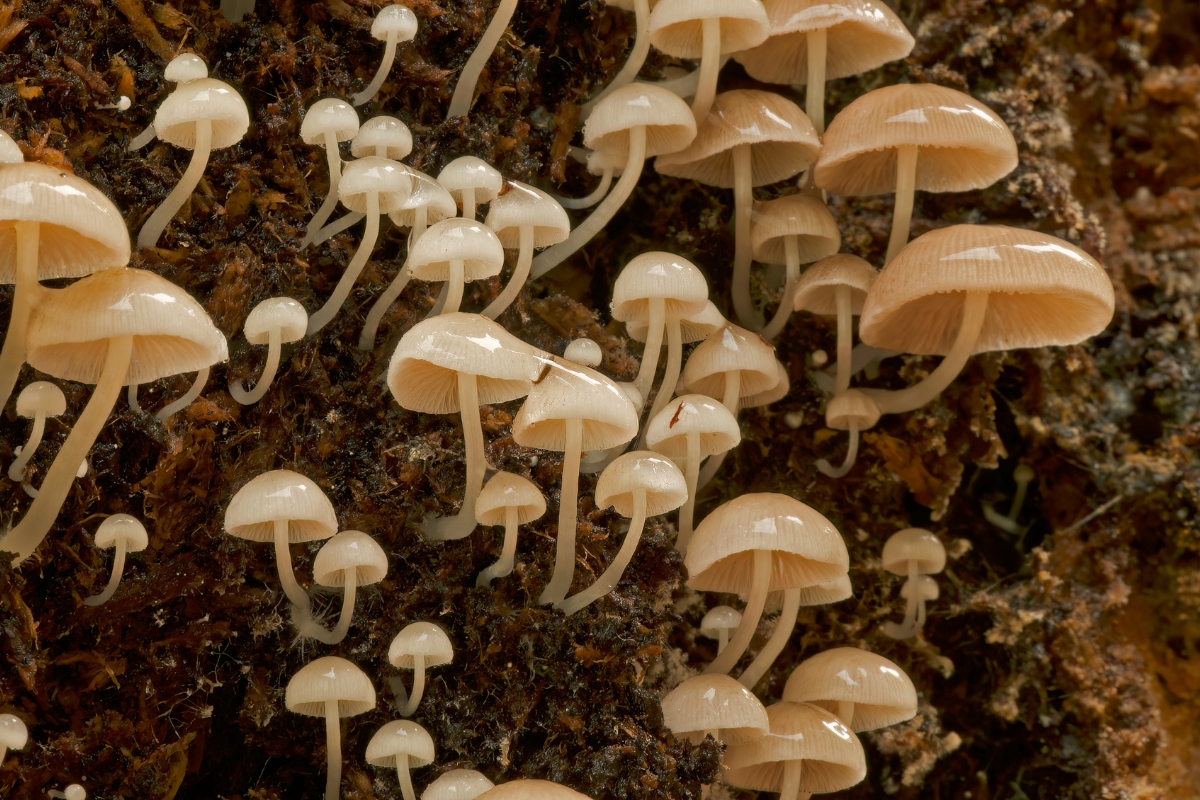
Healthy soil is far more than a mixture of minerals and organic matter. Beneath the surface exists a complex network of microorganisms that plays a critical role in supporting plant growth. Among the most important of these organisms are mycorrhizal fungi, beneficial fungi that form a natural partnership with plant roots and help crops access nutrients and water more efficiently.
Scientists estimate that more than 80 percent of land plants form some type of mycorrhizal association. These fungi extend far beyond the plant’s root system, creating an underground network that helps crops explore a much larger volume of soil than roots alone could reach.
As farmers look for ways to improve productivity while reducing fertiliser use, mycorrhizal fungi are receiving increasing attention within organic and sustainable farming systems.
Plant roots can absorb nutrients only from the soil immediately surrounding them. Mycorrhizal fungi solve this limitation by producing thread-like structures known as hyphae that spread throughout the soil.
These microscopic threads act as extensions of the root system, reaching nutrients and water located far beyond the root zone. In exchange, the plant supplies sugars produced through photosynthesis.
Researchers describe this relationship as one of the most successful natural partnerships found in agriculture.
Phosphorus Uptake Improves Significantly
Phosphorus is one of the most important nutrients required for plant growth. Although many soils contain phosphorus, much of it remains unavailable to crops because it becomes chemically bound within the soil.
Mycorrhizal fungi help release and transport phosphorus to plant roots. This improves nutrient uptake and supports healthier crop development.
Soil scientists note that phosphorus efficiency is becoming increasingly important as fertiliser costs continue to rise worldwide.
Water scarcity is emerging as a major challenge across many agricultural regions. Mycorrhizal fungi help plants cope with moisture stress by increasing the volume of soil explored for water.
The fungal network allows crops to access moisture that may otherwise remain unavailable. Studies have shown that plants associated with beneficial fungi often perform better during drought conditions than those without such partnerships.
Researchers believe these characteristics could become increasingly valuable as climate change affects rainfall patterns.
The advantages of mycorrhizal fungi extend beyond individual crops. The fungal network helps bind soil particles together, improving soil structure and stability.
Better soil structure increases water infiltration, reduces erosion, and creates a healthier environment for root growth. These improvements support long-term soil productivity rather than providing only short-term benefits.
Agricultural scientists frequently emphasise that healthy soil structure is fundamental to sustainable farming.
Organic Farmers Are Adopting Biological Solutions
Organic farming systems rely heavily on biological processes rather than synthetic inputs. Mycorrhizal fungi fit naturally within this approach because they enhance nutrient cycling through natural ecological relationships.
Many farmers are now using mycorrhizal inoculants during planting to encourage fungal colonisation of crop roots. Researchers continue studying the effectiveness of these products under different crops and environmental conditions.
Interest in microbial-based agriculture is growing as farmers seek alternatives to input-intensive production systems.
For decades, discussions about agricultural productivity focused mainly on fertilisers, irrigation, and crop genetics. Today, scientists increasingly recognise that biological processes within the soil are equally important.
Mycorrhizal fungi demonstrate how natural partnerships can improve nutrient efficiency, strengthen plant resilience, and support long-term soil health. These benefits make them valuable tools for sustainable agriculture.
For farmers, the technology offers an opportunity to improve crop performance while reducing dependence on external inputs. For researchers, it highlights the importance of understanding the biological systems that drive agricultural productivity.
Across millions of hectares of farmland, invisible fungal networks are quietly helping crops grow. As agriculture moves toward more sustainable production systems, these ancient partnerships are becoming more important than ever.
Also Read: Punarnava Jal – The world’s first organic fertilizer! Know how it is beneficial for farmers?
Contact us – If farmers want to share any valuable information or experiences related to farming, they can connect with us via phone or whatsapp at 9599273766 or you can write to us at “kisanofindia.mail@gmail.com”. Through Kisan of India, we will convey your message to the people, because we believe that if the farmers are advanced then the country is happy.
You can connect with Kisan of India on Facebook, Twitter, and Whatsapp and Subscribe to our YouTube channel.