

Step-by-Step Guide: Using Trichoderma harzianum for Broccoli Black Rot Control

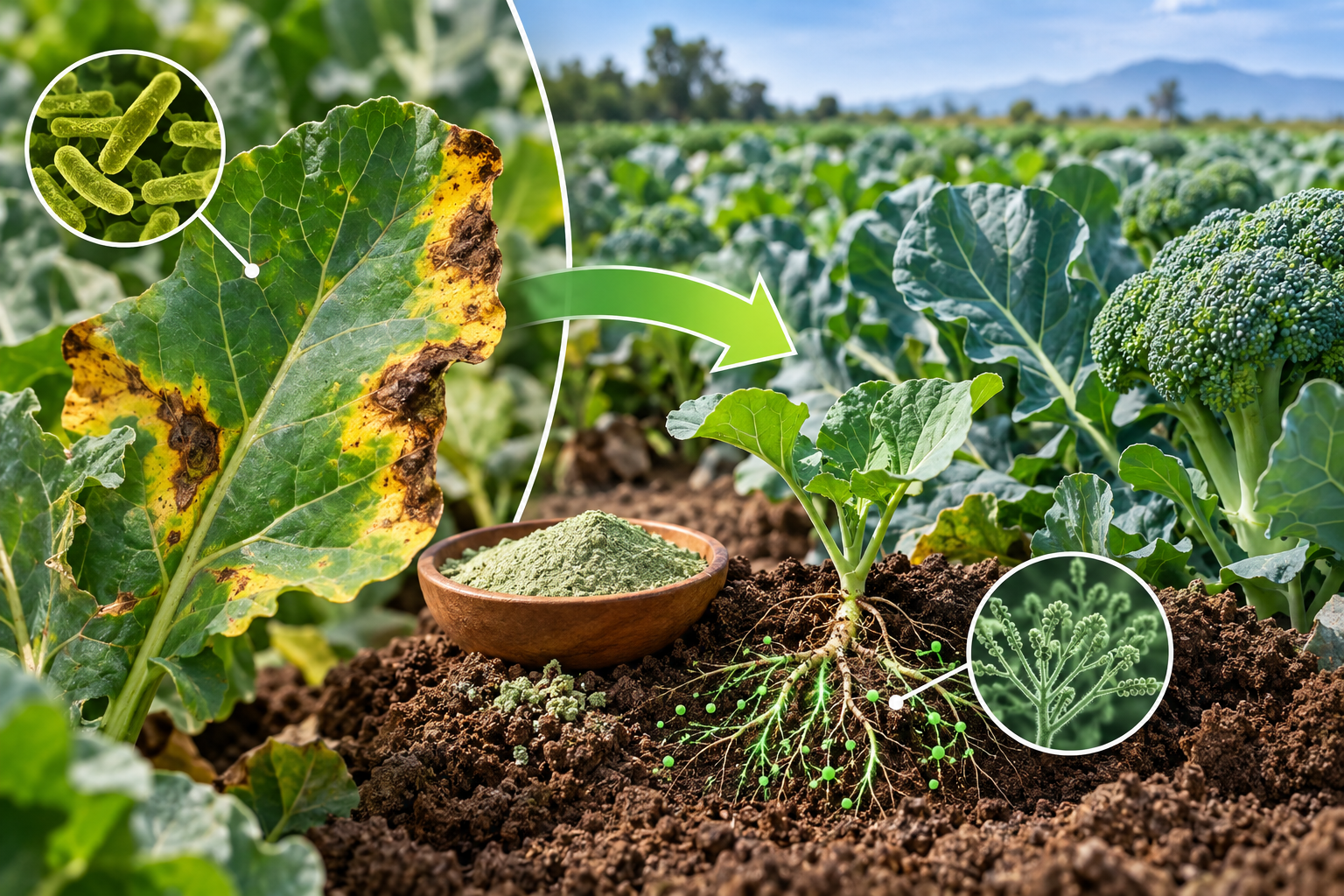
Black rot, caused by Xanthomonas campestris pv. campestris (Xcc), is one of the most destructive diseases affecting broccoli and other brassica crops worldwide. It thrives under warm, humid conditions, attacking leaves, stems, and vascular tissues. Infected plants display yellow V-shaped lesions on leaf margins that gradually turn brown or black, leading to stunted growth, reduced yield, and significant post-harvest losses.
Traditional management often relies on crop rotation, clean seed, and chemical bactericides. However, once black rot becomes established, fungicides and copper-based products have limited success, especially under conducive weather conditions. This has driven many growers to explore biological control solutions — especially those based on beneficial fungi such as Trichoderma harzianum.
What Is Trichoderma harzianum and How Does It Work?
Trichoderma harzianum is a naturally occurring soil fungus known for its strong antagonistic activity against plant pathogens. It colonizes plant roots and rhizosphere, competing with harmful fungi and bacteria for space and nutrients. Its multiple mechanisms make it particularly powerful in integrated disease management systems:
Mycoparasitism and antibiosis – Trichoderma directly attacks and degrades pathogenic microbes using enzymes like chitinases and glucanases.
Competition for nutrients – It quickly colonizes the root zone, denying pathogens access to essential nutrients.
Induced systemic resistance (ISR) – Plants treated with Trichoderma develop stronger defense responses, reducing disease incidence.
Plant growth promotion – The fungus enhances root growth and nutrient uptake, supporting overall plant vigor.
In the case of broccoli black rot, Trichoderma harzianum suppresses secondary fungal infections, enhances root health, and reduces the overall bacterial load by improving plant immunity — making crops more resilient to Xanthomonas.
To achieve consistent results, using high-quality, viable formulations such as trichoderma harzianum powder or advanced commercial trichoderma harzianum products is essential.
Why Fungicides Alone Aren’t Enough
While many growers instinctively reach for a fungicide for black rot at the first sign of infection, the truth is that black rot is a bacterial disease. Traditional fungicides often fail to provide reliable control and may disrupt beneficial microflora in the soil.
Trichoderma harzianum, by contrast, works in a completely different way — not by killing the bacteria directly, but by strengthening the plant’s immune system and creating an unfavorable environment for disease development. When combined with good cultural practices and minimal use of copper-based bactericides, it becomes a key pillar of a sustainable, residue-free disease management program.
Step-by-Step Guide: Using Trichoderma harzianum for Broccoli Black Rot Control
Step 1: Prepare Clean, Disease-Free Seed
Always begin with certified, pathogen-free seed. If there’s any doubt about contamination, treat the seed before planting. Soak it in warm water at 50°C for about 20–25 minutes, then let it dry completely before inoculation. This step reduces seedborne bacteria that can later cause black rot.
Step 2: Seed Treatment with Trichoderma harzianum
Before sowing, mix the dried seeds with trichoderma harzianum powder at a rate of about 5–10 g per kilogram of seed. Ensure an even coating so that each seed carries a protective layer of beneficial spores. This early inoculation helps the seedlings develop stronger roots and prevents pathogen invasion right from germination.
Step 3: Nursery Soil Preparation
Broccoli seedlings thrive best in clean, well-drained nursery soil. A few days before transplanting, apply a soil drench using a suspension of Trichoderma harzianum (about 10 g of powder per liter of water) to the nursery trays or seedbeds. This primes the root zone with beneficial microbes and keeps harmful pathogens in check.
Step 4: Transplant Treatment
Before transplanting, dip the roots of young seedlings in a mild Trichoderma suspension prepared from trichoderma harzianum products. Keep the roots submerged for 5–10 minutes, then transplant immediately into the main field. This treatment helps the plants adapt to the new soil and minimizes early infection stress.
Step 5: Soil Application After Transplanting
Ten to fifteen days after transplanting, apply a soil drench around each plant base. Use a 5–10 g dose of Trichoderma formulation per liter of water. Repeat this every 20–25 days during early crop growth, especially after rainfall or irrigation, when disease pressure tends to rise.
Step 6: Regular Field Monitoring
Inspect your crop regularly for yellowing leaves or V-shaped lesions. Remove and destroy infected plants to stop the spread of bacteria. Maintaining consistent Trichoderma applications and good sanitation keeps the disease cycle under control and supports steady crop growth through harvest.
Integration with Chemical and Cultural Control
A strong broccoli health program combines biological, chemical, and cultural practices rather than relying on a single method. Trichoderma harzianum plays a preventive role, but it works best when paired with good field hygiene and prudent use of registered crop protection products. Growers should rotate broccoli with non-cruciferous crops to reduce soil inoculum, avoid overhead irrigation to minimize leaf wetness, and disinfect tools after working in infected fields.
When bacterial pressure is high, supplementing biological control with a mild fungicide for black rot or copper-based bactericide can help reduce surface contamination on leaves. Always apply these treatments at separate times from biological products to prevent inactivation of beneficial microbes. By combining clean cultivation, precise irrigation, and timely biocontrol, farmers can maintain healthy fields without over-reliance on chemicals.
Comparing Black Rot Control Methods
Effective black rot control requires a balanced approach that fits both the crop and the farm’s management system. Chemical treatments may provide fast, visible suppression, but overuse often leads to resistance and residue concerns. Cultural methods like crop rotation, seed sanitation, and drainage improvement form a solid foundation but may not be enough during severe outbreaks. Biological control with Trichoderma harzianum adds a living layer of protection—enhancing soil health, supporting root vigor, and providing season-long resilience. In practice, combining these strategies delivers the most reliable results: cleaner fields, stronger plants, and healthier yields over time.
Black rot can be one of the most frustrating diseases for broccoli growers, but early prevention and biological balance make it manageable. By introducing Trichoderma harzianum at every growth stage—from seed to harvest—you build a natural defense system that complements clean cultural practices and reduces the need for heavy chemical use. Sustainable control isn’t about replacing one method with another—it’s about combining the best of both worlds for long-term plant health.
Also Read: Punarnava Jal – The world’s first organic fertilizer! Know how it is beneficial for farmers?
Contact us – If farmers want to share any valuable information or experiences related to farming, they can connect with us via phone or whatsapp at 9599273766 or you can write to us at “kisanofindia.mail@gmail.com”. Through Kisan of India, we will convey your message to the people, because we believe that if the farmers are advanced then the country is happy.
You can connect with Kisan of India on Facebook, Twitter, and Whatsapp and Subscribe to our YouTube channel.