


Trichoderma in Natural Farming: 7 Steps Farmers Can Follow to Protect Crop Roots

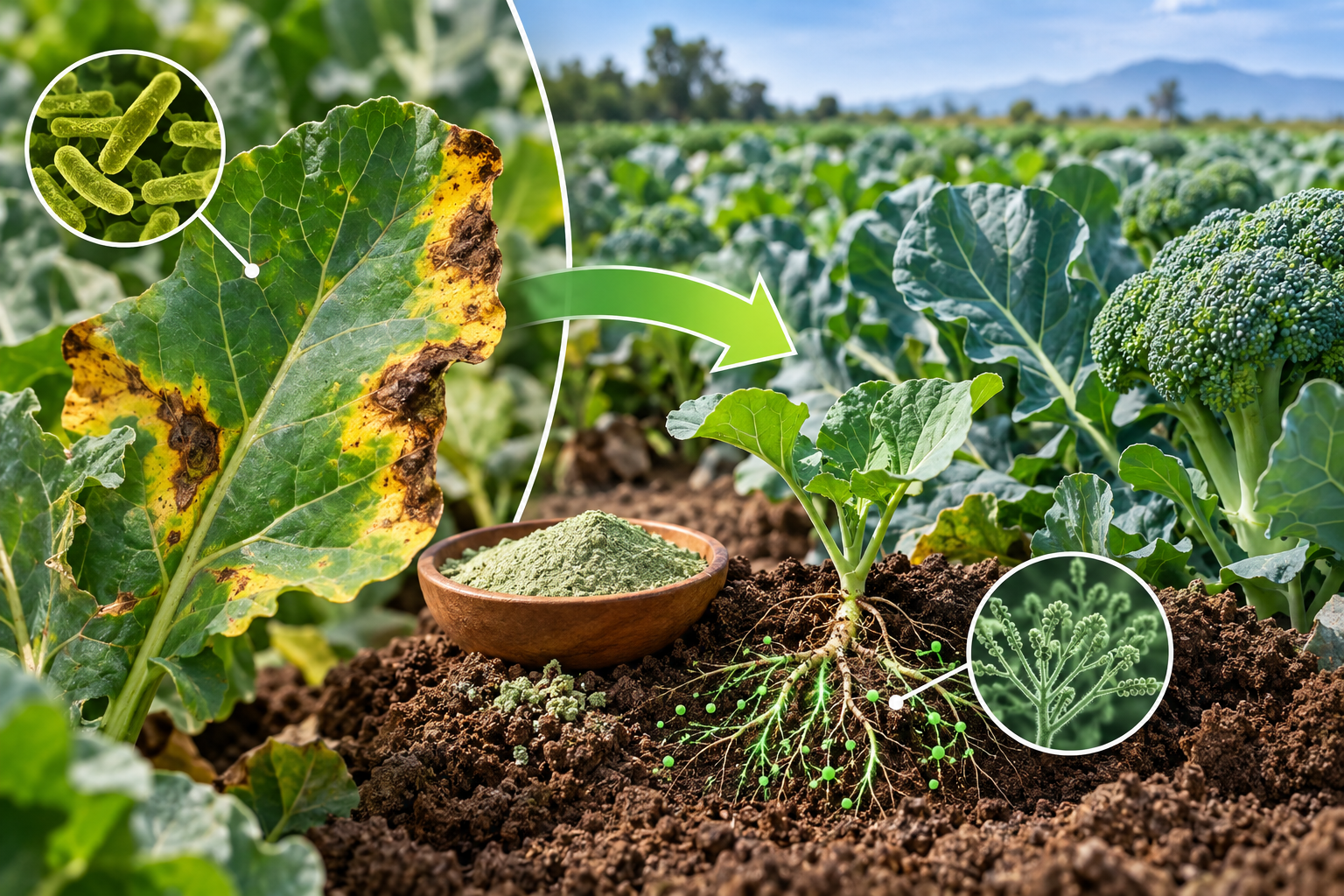
Farmers looking to reduce routine chemical use can consider biological inputs that support crop health without replacing field monitoring. Trichoderma is a beneficial fungus used in agriculture to suppress several soil-borne pathogens. ICAR has recently highlighted its use in seed treatment, seedling root dips and soil application.
Trichoderma works mainly around plant roots, where it can compete with harmful fungi and support healthier root development. Its usefulness depends on the strain, crop, soil conditions and application method. Farmers should therefore use products recommended for agriculture and follow the label rather than applying a homemade mixture without guidance.
7 Steps Farmers Can Follow
1. Start with a reliable Trichoderma product
Farmers should buy Trichoderma from a trusted agricultural input source and check the product label before use. The label should identify the strain or formulation, crop recommendations, application method, dose and expiry date. Poor-quality or expired products may give inconsistent results in the field.
2. Treat seed before sowing
Seed treatment can place Trichoderma close to the developing roots from the beginning of crop growth. Farmers should use the recommended quantity of the formulation and coat seed uniformly. Treated seed should be kept away from direct sunlight and sown according to the crop’s normal planting schedule.
3. Check compatibility with other treatments
Farmers should not mix Trichoderma casually with fungicides, pesticides or chemical seed treatments because some products can reduce the survival of beneficial organisms. If both biological and chemical treatments are required, farmers should follow the manufacturer’s compatibility instructions or seek advice from a KVK or agriculture department.
4. Use root dips where recommended
For transplanted vegetables and other suitable crops, Trichoderma can be applied as a root-dip treatment before planting. The method helps place the beneficial organism around the root zone. Farmers should follow crop-specific recommendations for concentration and dipping time rather than using one dose for every crop.
5. Apply it to soil or compost
Trichoderma can also be incorporated into soil, farmyard manure or compost where recommendations support this method. ICAR training programmes have highlighted soil application as one approach for managing soil-borne diseases. Farmers should maintain suitable moisture and organic matter because biological activity depends on local field conditions.
6. Combine it with better soil management
Biological inputs work best as part of a wider crop-health plan. Farmers can combine suitable Trichoderma use with crop rotation, clean planting material, balanced fertilisation, drainage and removal of heavily infected residues. These practices reduce the conditions that allow soil-borne diseases to build up season after season.
7. Monitor the crop instead of spraying routinely
Farmers should inspect fields regularly after sowing and record symptoms such as seedling death, root discoloration, wilting or poor emergence. Trichoderma is not a universal cure for every crop disease. Correct diagnosis remains important before selecting any biological or chemical control measure.
Natural Farming Needs More Than One Input
Natural farming does not mean that every biological product will work in every field. Soil type, temperature, moisture, crop variety and the disease involved can influence results. Farmers should test a recommended practice on a small area when appropriate and compare crop performance before adopting it across a larger holding.
ICAR’s June 2026 farmer programme in Bihar highlighted Trichoderma for seed treatment, seedling root dips and soil application as part of nature-based crop protection. The same programme also promoted farmyard manure, neem-based formulations and locally available biological inputs to reduce excessive dependence on chemical pesticides.
Farmers can seek technical support before using biological inputs. Krishi Vigyan Kendras and state agriculture departments can help identify suitable products, application methods and crop-specific recommendations. A practical approach is to combine biological disease management with good seed, drainage, field sanitation and regular scouting instead of depending on one input.
ICAR has also recently conducted training on natural farming and PGS-India certification, showing continued attention to farmer capacity building around natural production systems. Such training can help farmers understand how biological inputs fit into broader farm management rather than treating them as standalone replacements for every conventional practice.
Trichoderma can be a useful biological tool when farmers use the right formulation and application method for their crop. Seed treatment, root dips and soil application can form part of an integrated approach. Good drainage, healthy planting material, crop rotation and regular field monitoring remain equally important.
Also Read: Punarnava Jal – The world’s first organic fertilizer! Know how it is beneficial for farmers?
Contact us – If farmers want to share any valuable information or experiences related to farming, they can connect with us via phone or whatsapp at 9599273766 or you can write to us at “kisanofindia.mail@gmail.com”. Through Kisan of India, we will convey your message to the people, because we believe that if the farmers are advanced then the country is happy.
You can connect with Kisan of India on Facebook, Twitter, and Whatsapp and Subscribe to our YouTube channel.