



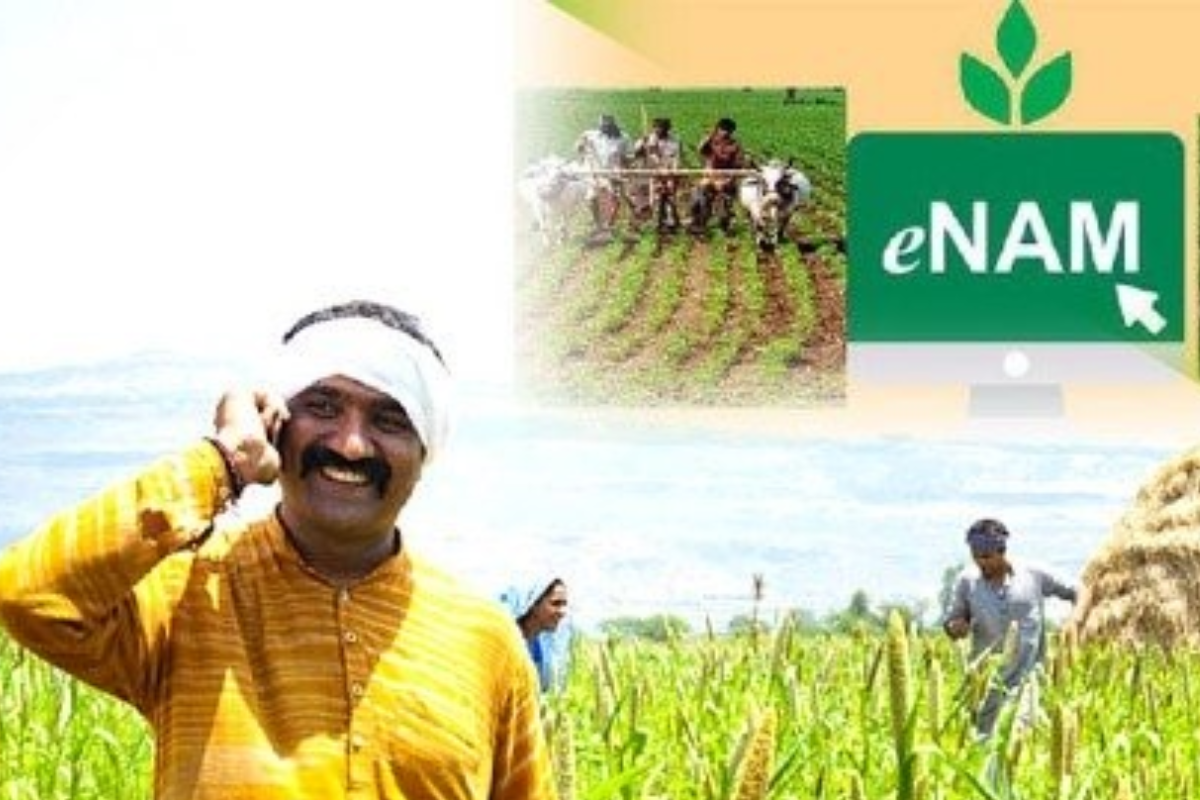
e-NAM is changing how farmers can sell agricultural produce through APMC mandis. The national platform connects physical markets through electronic trading and gives sellers access to more buyers. As of June 30, 2026, 1.89 crore farmers and 2.78 lakh traders were registered, showing the platform’s expanding reach.
e-NAM had integrated 1,656 mandis across 23 states and four Union Territories by March 2026. Between 2016 and March 2026, the platform recorded cumulative trade of 13.25 crore metric tonnes worth ₹4.84 lakh crore. These numbers show that digital agricultural marketing is no longer a small pilot.
How does e-NAM help farmers sell?
For farmers, the main benefit is access to information before selling. The e-NAM system provides real-time information on prices and arrivals in participating markets. Farmers can compare market conditions and make better decisions about where and when to sell, rather than relying only on information available locally.
The platform also uses online bidding to improve price discovery. Buyers can participate in electronic auctions, while farmers can receive prices linked to the quality of their produce. Assaying helps assess quality before trading, allowing produce with better characteristics to be valued more clearly during the sale.
Registration does not require a fee. Farmers can register through the e-NAM portal, mobile application or at an e-NAM mandi. The official registration process asks for details such as name, address, mobile number and bank information, along with government identity proof and passbook or cheque details.
After registration, the farmer selects the relevant APMC and completes the required KYC process. Once the application is approved, the farmer receives a permanent e-NAM login. Farmers can then use the platform to view mandi information, track their lots and follow transactions from entry through sale.
What happens after produce reaches the mandi?
At the mandi, produce is digitally recorded and given a unique lot identity. The system allows the lot to be tracked through different stages of the transaction. After bidding, the farmer can see the winning price and choose whether to accept or reject the auction result.
Payment is another important part of the system. e-NAM supports electronic payment through methods including NEFT, RTGS and UPI. The government says sale proceeds can be transferred directly into the farmer’s bank account. This creates a formal transaction record and can reduce dependence on cash-based settlement.
e-NAM is also expanding beyond ordinary mandi auctions. Its Platform of Platforms brings services such as logistics, warehousing, quality assurance, grading, packaging, financial services and agricultural advisories into the wider digital system. The platform also provides free price information for 247 notified commodities through its mobile application.
Inter-state trade is another area where e-NAM is trying to widen market access. Government data shows inter-state trade increased from 563 tonnes worth ₹37 lakh in 2018-19 to 2,984.3 tonnes worth ₹14.28 crore in 2025-26. The cumulative inter-state trade reached 28,566 tonnes worth ₹83.95 crore.
Does e-NAM guarantee a better price?
Farmers should still understand that e-NAM does not automatically guarantee a higher price for every sale. Prices depend on demand, supply, quality, arrivals and market conditions. A digital auction can improve transparency and buyer access, but the final price still depends on what buyers are willing to offer.
Farmers also need to check whether their nearby mandi and chosen commodity are integrated with e-NAM. They should understand local mandi rules, grading requirements, transport costs and other charges before sending produce for sale. These factors can affect the final return even when the online auction price looks attractive.
Farmer Producer Organisations can also use e-NAM to market produce collectively. FPOs and FPCs can register through the portal or at an e-NAM mandi. Collective selling can help groups assemble larger quantities, improve bargaining power and make it easier to meet buyers’ requirements for quality and consistent supply.
For farmers who want to try e-NAM, the first step is simple: check the nearest integrated mandi and confirm whether the crop is covered. Registration is free, and farmers can seek help from the mandi or e-NAM support system. The platform works best when farmers use its price information before making a sale.
Also Read: Punarnava Jal – The world’s first organic fertilizer! Know how it is beneficial for farmers?
Contact us – If farmers want to share any valuable information or experiences related to farming, they can connect with us via phone or whatsapp at 9599273766 or you can write to us at “kisanofindia.mail@gmail.com”. Through Kisan of India, we will convey your message to the people, because we believe that if the farmers are advanced then the country is happy.
You can connect with Kisan of India on Facebook, Twitter, and Whatsapp and Subscribe to our YouTube channel.